-
Your next favorite book
is waiting.
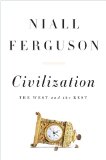
The rise to global predominance of Western civilization is the single most important historical phenomenon of the past five hundred years. All over the world, an astonishing proportion of people now work for Western-style companies, study at Western-style universities, vote for Western-style governments, take Western medicines, wear Western clothes, and even work Western hours. Yet six hundred years ago the petty kingdoms of Western Europe seemed unlikely to achieve much more than perpetual internecine warfare. It was Ming China or Ottoman Turkey that had the look of world civilizations. How did the West overtake its Eastern rivals? And has the zenith of Western power now passed?
In Civilization: The West and the Rest, bestselling author Niall Ferguson argues that, beginning in the fifteenth century, the West developed six powerful new concepts that the Rest lacked: competition, science, the rule of law, consumerism, modern medicine, and the work ethic. These were the "killer applications" that allowed the West to leap ahead of the Rest, opening global trade routes, exploiting newly discovered scientific laws, evolving a system of representative government, more than doubling life expectancy, unleashing the Industrial Revolution, and embracing a dynamic work ethic. Civilization shows just how fewer than a dozen Western empires came to control more than half of humanity and four fifths of the world economy.
Yet now, Ferguson argues, the days of Western predominance are numbered-not because of clashes with rival civilizations, but simply because the Rest have now downloaded the six killer apps we once monopolized-while the West has literally lost faith in itself.
Civilization does more than tell the gripping story of the West's slow rise and sudden demise; it also explains world history with verve, clarity, and wit. Controversial but cogent and compelling, Civilization is Ferguson at his very best.
"The book would have gained by greater focus and less of a jumble of details. The reason for Ferguson's fear of 'the rest' isn't clear, but those who share his concern will find that he has penned a sobering caution." - Publishers Weekly
"Fans of Ferguson will find him as engaging as ever, but numerous digressions and simplistic treatments mar the book's potentially intriguing points." - Library Journal
"A richly informed, accessible history lesson." - Kirkus Reviews
"Ferguson is the most brilliant British historian of his generation ... he writes with splendid panache." - The Times (UK)
"One of the world's leading historians." - The Independent (UK)
"Civilization is another masterpiece ... a pulsing energy suffuses his account [and] fascinating facts burst like fireworks on every page." - Sunday Times (UK)
"This is sharp. It feels urgent. Ferguson, with a properly financially literate mind, twists his knife with great literary brio." - Financial Times (UK)
"A dazzling history of Western ideas." - The Economist (UK)
This information about Civilization was first featured
in "The BookBrowse Review" - BookBrowse's membership magazine, and in our weekly "Publishing This Week" newsletter. Publication information is for the USA, and (unless stated otherwise) represents the first print edition. The reviews are necessarily limited to those that were available to us ahead of publication. If you are the publisher or author and feel that they do not properly reflect the range of media opinion now available, send us a message with the mainstream reviews that you would like to see added.
Any "Author Information" displayed below reflects the author's biography at the time this particular book was published.
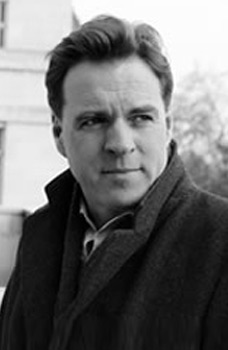
Niall Ferguson, MA, D.Phil., is Laurence A. Tisch Professor of History at Harvard University. He is also a Senior Fellow at the Hoover Institution, Stanford University, and a Senior Research Fellow at Jesus College, Oxford.
Born in Glasgow in 1964, he graduated with First Class Honors from Magdalen College, Oxford. His books include Paper and Iron: Hamburg Business and German Politics in the Era of Inflation 1897-1927, The Pity of War: Explaining World War One, The World's Banker: The History of the House of Rothschild, High Financier: The Lives and Time of Siegmund Warburg, The Great Degeneration and Henry Kissinger: A Life.
He won the Wadsworth Prize for Business History and was also short-listed for the Jewish Quarterly/Wingate Literary Award and the American National Jewish Book ...
... Full Biography
Link to Niall Ferguson's Website
Name Pronunciation
Niall Ferguson: Can be pronounced Nigh-al or Neil depending on country of origin. The author pronounces his name Neil

If you liked Civilization, try these:
by Naoíse Mac. Sweeney
Published 2023
Prize-winning historian Naoíse Mac Sweeney delivers a captivating exploration of how "Western Civilization" - the concept of a single cultural inheritance extending from ancient Greece to modern times - is a powerful figment of our collective imagination. An urgently needed emergent voice in big history, she offers a bold new account of ...
by Alan Mikhail
Published 2021
An explosive global history that redefines the historical origins of the modern world through the life of Sultan Selim I and his Ottoman Empire.
by Christopher de Bellaigue
Published 2018
A revelatory and game-changing narrative that rewrites everything we thought we knew about the modern history of the Islamic world.

L.A. Women by Ella Berman
Two ambitious writers in 1960s LA face betrayal when one writes a novel based on the other's life.






Your guide toexceptional books
BookBrowse seeks out and recommends the best in contemporary fiction and nonfiction—books that not only engage and entertain but also deepen our understanding of ourselves and the world around us.